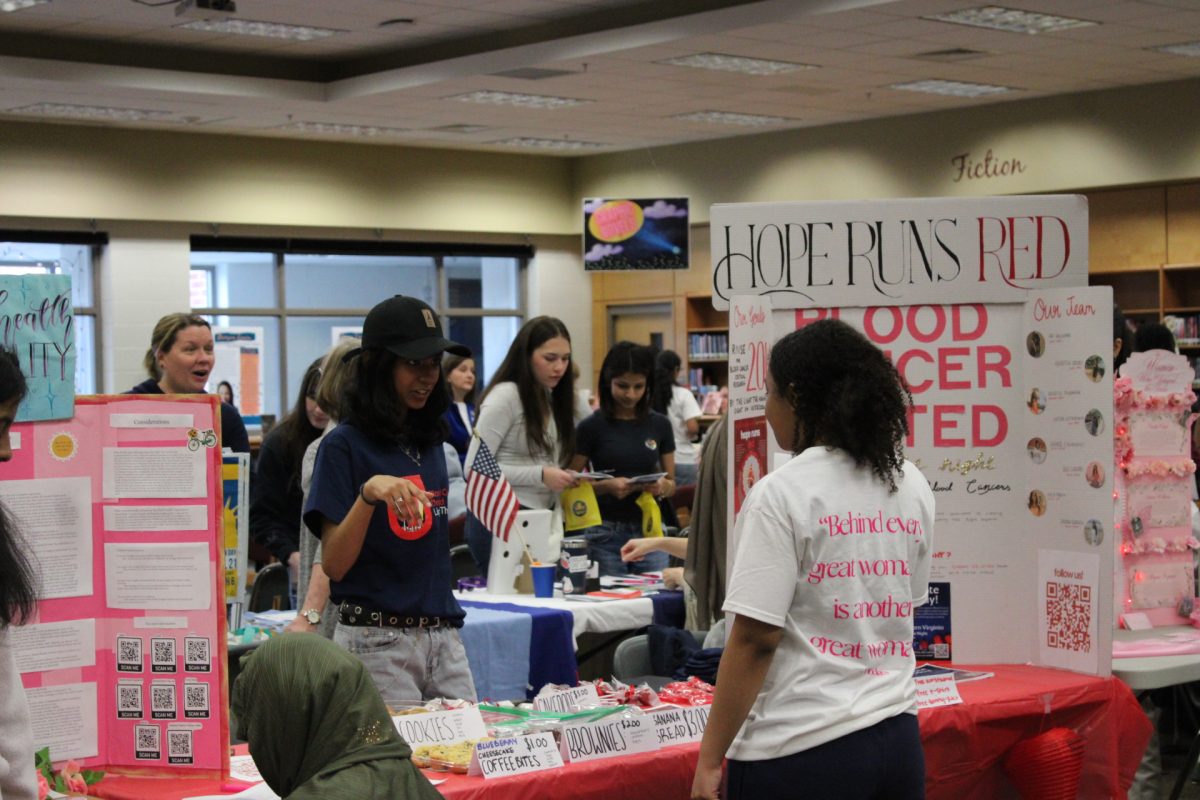
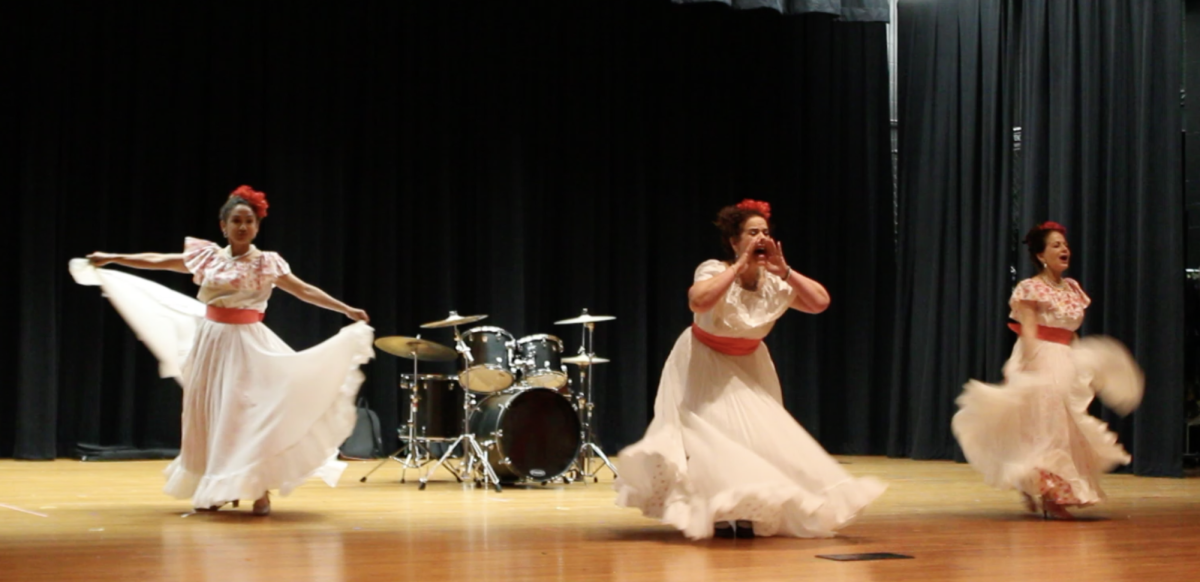
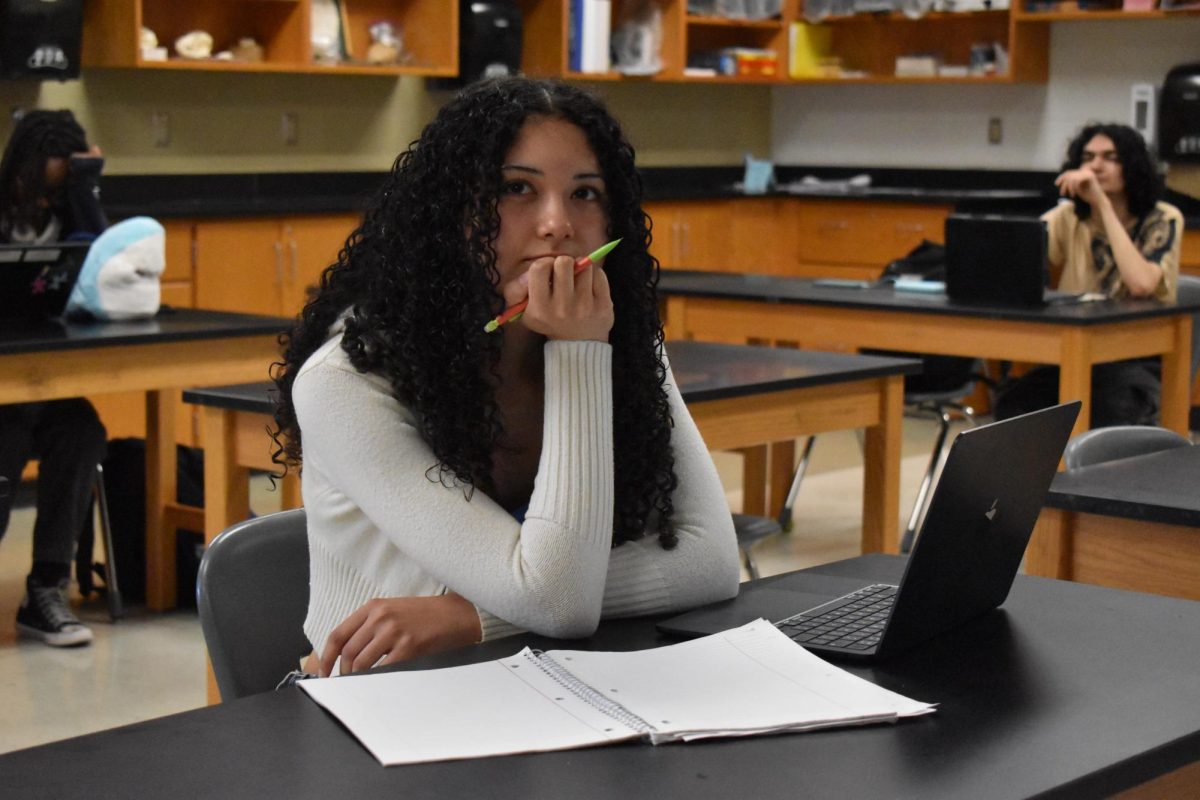
On March 14, students, teachers, and community members gathered at Rock Ridge High School for the seventh annual “Rise To” women’s summit. More than 200 people and 20 speakers—authors, activists, and educators from organizations such as the National Organization for Women (NOW) — attended this event.
The event began with organizer and gender studies teacher Jessica Berg delivering her opening remarks. “It has always been women who are the true patriots of this land,” Berg said. “We carry a legacy of patriotism, [which] begins by empowering one another. This [summit is] full of people who are leaders, who are creating space, having the conversations, and raising the daughters— the future inheritors of our rebellion.”
Throughout the summit, women like Shiwali Patel, attorney for the Women’s National Law Center, discussed the issues they faced. “[When] growing up, my sister, my mom, and I [learnt] to make ourselves small, to stay safe,” Patel said. “Again and again, I witnessed things that were unfair, painful, wrong, and every single time I felt the same thing: powerless.”
Others talked about the impacts of how sexual assault adversely affect women. “I [have experienced] the victim blaming and issues that come with Title IX cases when people don’t know how sexual assault actually affects survivors,” LAWS Domestic Violence & Sexual Assault Services violence prevention specialist Catherine Parker said. “Through that process, it just kind of made me really motivated to change the process that was in place [of] how women and survivors of sexual assault are treated through it.”
The issues that women face also find their way in healthcare too. “I don’t know if the greater issue is the education… [or the] healthcare system,” District Pelvic Health physical therapist Maliha Khan said. “There’s a lot of symptoms that women experience that they truly never needed to. I get patients who are like, ‘Wow…I didn’t know that if my periods were super debilitating and painful, that it didn’t have to be that way.’ They kind of accept that that’s their life….The problem is everything’s so stigmatized, [and] nobody’s talking about it out loud.”
In fact, many leaders at the summit found speaking up to be one of the most powerful parts of their activism and their gateway into activism.
“[My mother] came to America from a refugee camp [where she] dragged [her] little children through the camps, not knowing if her husband was alive,” on-air host at WHUR Sunni Puric said. “[At her] job [in America]…working at some pickle factory [she and other immigrants] had water up to their knees…She was like, ‘I don’t think this is supposed to be happening’… so she rallied all of these people…and they realized, ‘I don’t think this is how we’re supposed to be treated.’ Since she learned to speak English, she has been speaking about every single thing she sees wrong, so I guess that’s where I get it from.”
To others, talking and having conversations are needed to tackle issues that affect women. “There are all sorts of people with all sorts of intersectional identities that are affected by issues [like discrimination and voting rights],” Loudoun Pride Foundation treasurer Candice Tuck said. “Talk to people…[have] real, honest discussions with real people who are affected, [or read] a website or social media, or engage with the news. You have to have real conversations with the people impacted by [issues].”
Some have found that talking to others can bring attention to important issues, such as raising awareness for sexual assault. “Trauma comes in [fragments] when people talk about it,” Parker said. “I am so thankful that the #MeToo era has happened and people are much more able to speak up on these things. There’s still a lot of work that needs to be done, [but] that’s where all of you come in with empowering those voices that do eventually speak up.”
The right of speaking up is something that many have, and international advocate for human rights Nargiss Jamal believes people should utilize it. “Everyone is not in Afghanistan,” Jamal said. “[In Afghanistan], women [cannot] talk. If I raise someone’s name, and the Taliban finds out, that girl, her family, her career, everything will be taken from her, but not everyone is in Afghanistan. I truly believe speaking out about someone’s right, about your right, or raising your voice for others is a beautiful thing you can do in your life.”
Some young leaders have made an effort to improve speech within the younger community to motivate change. “It’s really important to me now that when I have this platform, [to] be able to come speak,” Cancer Kids First founder and CEO Olivia Zhang said. “My goal is to hopefully inspire other young people and remind them that no matter what they’ve gone through – obstacles that they’ve overcome, or that they’ve encountered – they can overcome it, and [they have the] agency to kind of change their life and make a difference in other people’s worlds.”
By the end of the summit, some students felt empowered. “I felt very seen,” sophomore Saanvi Dasaraju said. “Throughout the speeches and just even walking around and seeing the booths, I felt like we were a big community that was together. It was all just like, ‘Wow. You’re amazing!’ [and], ‘Wow, you’re powerful!’ I definitely feel more inspired.”
However, students weren’t the only ones who found inspiration at the summit. Panelists were also inspired by the engagement they witnessed. “Confidence [is the biggest issue for women today],” published author and English teacher at Broad Run High School Michele Evans said. “A number of the students that I teach sometimes struggle with [the] confidence [to] make [their] voices heard. After today, that was definitely not on display. [When I was the students’ age], I did not have the voice or confidence [to] see myself ever being able to stand in front of a group of people and to talk, [so] it is very encouraging to see so many young women sit on the chairs and speak effortlessly.”