





![Phoenix gets in position to initiate the beginning of an intense game. “It's coming to the end of the season here, so [our goal] is to just focus on working harder,” senior lineman Ryan Abbondanza said.](https://theblazerrhs.com/wp-content/uploads/2025/10/DSC_0042-1200x800.jpg)


































Junior Kushi Valapadasu smelled it first, and she had no idea what it was.
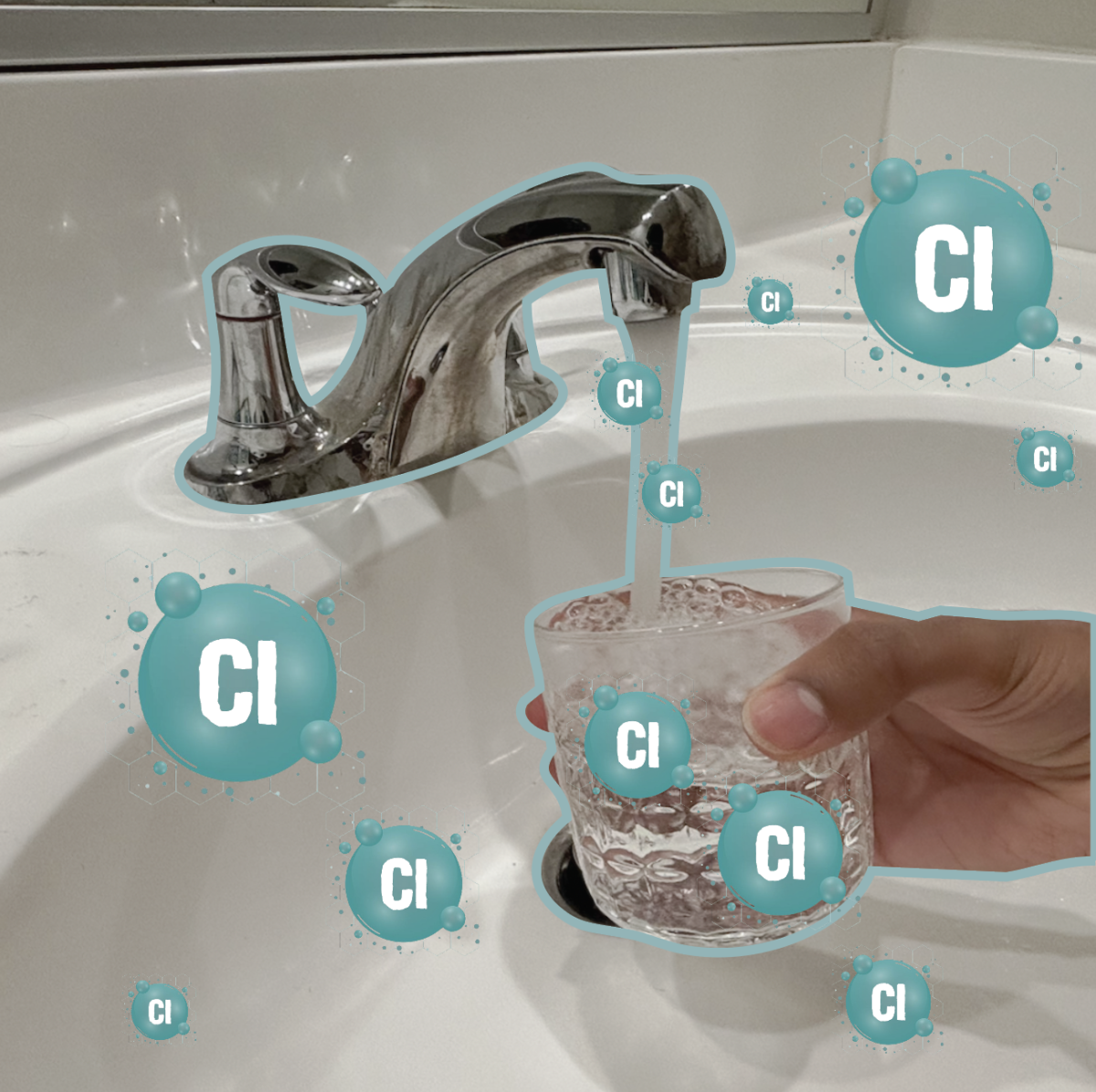
The water coming out of her Loudoun County home had an odd, chemical smell she couldn’t quite understand. She had lived in her neighborhood for approximately 12 years, and this hadn’t happened to her before. Or at least, she never noticed or knew why. She assumed there was something wrong with her filtration system. Maybe the pipes. She wasn’t sure.
“I just thought our pipes were broken or something,” Valapadasu said.
Junior Vasudha Kompella, a resident of Loudoun County for over 10 years, said the chlorine smell has been common during the spring, though she never knew what was causing it.
“It always comes back around this time,” Kompella said. “[The scent was stronger this year,] but it wasn’t new for the past couple years.”
Padma Valapadasu, a longtime resident of Loudoun who has lived in the same home for nearly 12 years, smelled the chlorine in the shower. “When [I take a bath or a shower], I felt [like] I smelled a lot of chlorine,” Padma Valapadasu said. “Just in case, to be safe, I use three filters for drinking water.”
But the chlorine they smelled was not a sign that their pipes were broken. It was part of Loudoun Water’s Annual Hydrant Flushing Program, a maintenance operation that runs from March to June to keep the water system clean, keep hydrants operational, and keep the pipes free of sediment.
The water, throughout the entire process, remains safe to drink according to Loudoun Water. But for some residents, the first sign that flushing is underway is a sharp smell of chlorine and small amounts of sediment in their water – not an alert from the utility service.
How it Works:
In Loudoun County, Loudoun Water crew members open hydrants to flush water mains, take samples to make sure all levels are intact, and clear sediment from the water lines – a process that allows for crews to monitor the system’s health and maintain high standards of water quality.
Field service employees travel to their assigned hydrants, typically working in pairs and leapfrogging down a water line from one hydrant to the next.
“First, they will ensure that all of the valves on the hydrant are in proper operational order. They will then open the hydrant to allow water to flow,” Cathy Cogswell, Program Director of Compliance and Water Quality at Loudoun Water, said. “The employee will take an initial chlorine reading to identify the chlorine residual in the area, and then, if needed, will allow water to flush to move fresh water into the area and increase the chlorine residual to a target of around 3ppm [parts per million].”
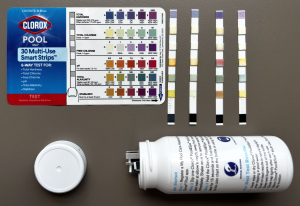
According to the EPA, the safe amount of chlorine in the drinking water is 4 mg/L – a threshold Loudoun Water’s levels remained within throughout the flushing period. The Blaze confirmed this by measuring chlorine levels from various water sources at Rock Ridge High School and local households using chlorine test strips purchased at a local retailer.
The Chemistry:
For roughly 37 weeks a year, Loudoun Water treats drinking water using chloramine, a disinfectant formed by mixing chlorine with ammonia. Chloramines are stable, keep the water safe as it travels long distances, and are commonly used by public water systems to treat drinking water. They are safe for consumption.
In those other 15 weeks from late March to mid-June, that formula changes.
During the spring maintenance period, the utility stops adding ammonia and instead switches to free chlorine, which is chlorine in an uncombined state that is more aggressive and more effective at sanitizing drinking water by killing bacteria, viruses, and algae. In short, it provides a deeper cleanse for the pipes.
“The decision to use free chlorine is to allow for a more in-depth cleaning of the pipes,” Cogswell said. “Free chlorine is effective at killing certain types of bacteria, but is less stable. Due to being less stable, free chlorine also can cause higher levels of disinfection by-products, which is why it is not used year-round.”
The timing of the switch is not decided by Loudoun Water alone. “We coordinate our free chlorine switchover window to match our wholesale provider – Fairfax Water – who also performs a free chlorine switch,” Cogswell said. “The hydrant flushing will continue until all hydrants in the service area have been flushed.”
For most households, the flushing program begins and ends without a noticeable change. For others, it shows up at the tap, and for some, it has been showing up for years with no explanation.
Kompella’s family has grown accustomed to the annual smell. “[When we smelled it this year,] we didn’t really do anything about it,” Kompella said. “We still [drink the water] anyway.”
However, Loudoun Water finds that these changes in smell and taste are not abnormal. “During the flushing program, it is possible that customers may see a small amount of sediment in their water if employees are flushing the water mains servicing their home,” Cogswell said. “If this occurs, we encourage customers to open their faucet taps and flush the water in their home for three-five minutes to allow the lines to clear. During the free chlorine switchover, there is a possibility [that] a customer may notice a small difference in smell; however, this is not abnormal. There should be no change to water pressure. If a change in water pressure is noted, customers should call Loudoun Water or their water utility.”
Although Loudoun Water claims that water remains safe, residents with chlorine sensitivities may notice irritation during the switchover. “[The chlorine] can dry out your skin, and obviously, that’s not something that you want, because there’s potential ways that the immune system can react to that,” biology teacher Madina Mamatova said. “And I know that sometimes it can lead to allergic reactions and eczema.”
Cogswell acknowledged the concern. “During spring, when we have our chlorine switchover, any residents with sensitivities to chlorine may experience minor symptoms,” Cogswell said. “If you do notice a change that corresponds to our spring switchover, having a discussion with your doctor would be a great first step.”
The Information Gap:
Loudoun Water does make its information about the flushing program available to the public. The website covers the program’s timing, process, and what residents might notice.
“Every year we put up a new page with the updated information,” Cogswell said.
Yet for some, the process of checking Loudoun Water’s webpage is inconvenient. “Who would go to the [Loudoun Water] site and read about all this?” Padma Valapadasu said.
However, not many residents are aware of this website, and believe Loudoun Water should invest more time in informing citizens about these changes.
“[If they posted about it on social media more,] I probably would have seen it,” Kompella said. “So I would know it’s happening before I smell it.”
Valapadasu believes that direct notices would be harder to miss.
“[Loudoun Water] doesn’t really advertise its resources that much,” Valapadasu said. “I’m sure they do, but only to those who are actively seeking it. If they put flyers in our mailboxes, or [sent] texts or emails, [they would have informed more residents because these] are pretty much [things] that people would have actually [seen].”
For residents who want more information about hydrant flushing, Loudoun Water’s customer service line is available for any questions, and updated flushing information is posted every spring at loudounwater.org.