

![Phoenix gets in position to initiate the beginning of an intense game. “It's coming to the end of the season here, so [our goal] is to just focus on working harder,” senior lineman Ryan Abbondanza said.](https://theblazerrhs.com/wp-content/uploads/2025/10/DSC_0042-1200x800.jpg)




















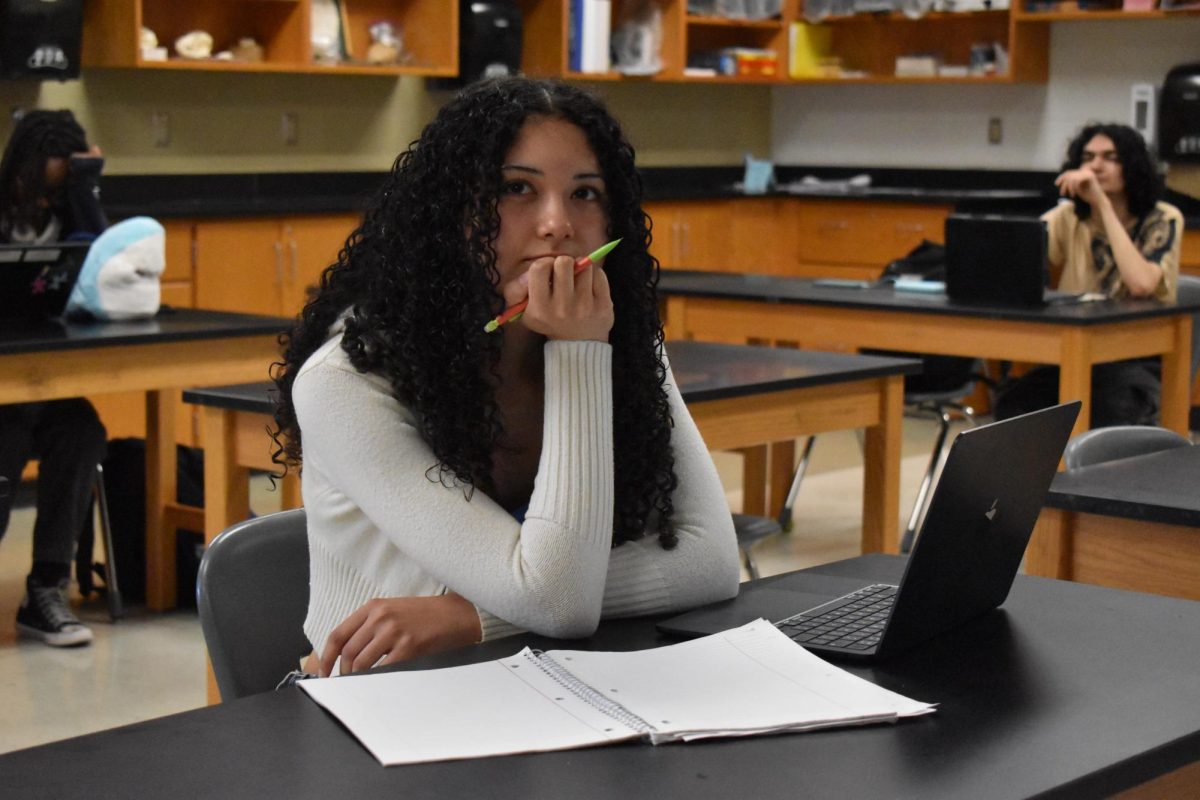


Senior Nandan Dammalapati opens up his notebook and gets ready for class. As his teacher begins the lesson, he slowly finds himself staring into space, dozing off, and constantly checking the clock until the class becomes a blur. Soon, unfinished assignments and final projects pile up in his bag, shoved to the back of his mind. Replacing them was a single thought— I can’t wait to graduate.
What Dammalapati is experiencing is a common feeling among seniors who have received their college acceptances and are ready to move on to their next chapter. This feeling of a decreased sense of purpose in high school can be defined as “senioritis,” or an “ebbing of motivation and effort by school seniors as evidenced by tardiness, absences, and lower grades,” according to Merriam-Webster.
At first glance, Rock Ridge may seem free from it, being a school that’s characterized by heavy competition, high expectations, and rigorous standards. In fact, Capstone students will be taking AP exams until their final day of high school. Although the transcripts of many seniors may have steady grades with only minor fluctuations and acceptable attendance, senioritis still exists.
For senior Sai Cherukuri, less discipline and care towards his schoolwork can be found behind the A’s in his transcript. “I still care about my grades,” Cherukuri said. “Like, personally, I don’t want to see anything lower than an A minus for my final grades, so I try to keep a bare minimum, but beyond that, I don’t really care. Like for APES, I know I’m gonna finish the class with an A, so I don’t really care if I finish this quarter with a C or a B; I care about my final grade, but not much beyond that.”
Similarly, senior Mouktika Narala noticed that she stopped trying as much on her assignments. “I don’t care if I turn in things late anymore,” Narala said. “Before, I would always turn in things on time, even if it meant staying up late. Now I’m just like, ‘Okay, I’ll take the late credit. I just won’t do them until later.’ In math, I used to do all the homework, but now I just don’t do [it] until the day before the exam. I just don’t feel like doing things on time anymore [unless it’s for] maximum credit.”
This decline of effort in seniors hasn’t gone unnoticed in the classroom, with some teachers expressing concern about noticeable changes in behavior during the second semester.
“The assignments that we want them to do, if I don’t give a grade for [them], I get no response,” AP Government teacher Eric Duke said. “Now I get zero [assignments back from students if it’s a formative grade], and so they’re only motivated by their grades. I want to be giving them things to learn [that] help them [prepare for their] quizzes, but I can’t get them to do [those assignments], so they are suffering on the quizzes and the tests.”
DE and AP physics teacher Rama Srinivasan was also surprised to notice that students who were once consistent in their participation are now producing more incomplete work with bare minimum effort.
“[I have] students who actually consistently strive to be excellent, and then suddenly, they have kind of dropped off,” Srinivasan said. “They have been showing that kind of body language, and it’s showing in their work. It may not be a drastic drop in grades, but definitely a significant drop compared to where they could be. Even for my AP physics kids, I’m seeing that there is a little bit of lack of effort, and they’re willing to take that great cut [in their grade] if they turn in [assignments] late, which they would not have done last quarter.”
The seats in classrooms have also grown emptier as senior attendance decreases—another challenge driven by senioritis.
“I would just start seeing eight [students] gone, nine gone, not showing up,” Duke said. “It’s really bad first and fifth block and really bad at the end of the day as well. I am struggling right now to get all of my assignments completed by my seniors. [When] kids are asking me for Capstone [approval], I’m having to go in and look at their attendance, and I’m realizing, ‘Oh no, I cannot approve your Capstone program. You’re not even showing up to class.’”
According to data from Rock Ridge Student Support Advisor Elizabeth Bush, senior absenteeism rises significantly as the school year progresses. Specifically, chronic absenteeism, defined as missing at least 10 percent of school days, has increased from 14.9% at the end of quarter one to 28.4% by the end of quarter three at Rock Ridge.
For the 2023-2024 and 2024-2025 school years, chronic absenteeism was 36.1% and 32.1% respectively by the end of quarter 4.
This decrease in attendance is attributed to some seniors treating school as optional following their college acceptances.
“For classes that I really dread staying in, I’ll just genuinely leave,” Dammalapati said. “Some days me and my friends who carpool will unanimously make a decision to not come to school on time and go an hour late to hang out. I haven’t been to math in three weeks, [and] in the last four weeks, I’ve gone twice. I don’t think [colleges] will care [about attendance] much because I don’t skip like five days out of the week. As long as you’re getting everything done, I don’t see what’s the problem.”
What may seem inconsequential now, could impact seniors more than they realize. Drops in grades and a lack of attendance on a final transcript may affect college applications and, in some cases, affect admission offers, as colleges expect students to maintain their academic effort.
“It’s important for students to know that [their] senior year does count,” Director of Admission at University of Maryland James B. Massey Jr. said. “Even though we’re making admission decisions prior to senior grades being posted, we still see your final transcript to make sure you are consistent in terms of your academic work. If a student is not consistent in their academic work, and let’s say they had a really terrible year altogether, it could result in something as severe as rescinding their admission decision.”
In fact, each year, 1% to 2% of admitted students have their offers rescinded for failing to meet these requirements, but before students receive a revocation, colleges send notices.
“There are usually stages of warning, so if we notice that a student is having a downslide, if we’ve received mid-year grades or a third-quarter grade, we do reach out and let them know: ‘You [need] to pick [your grades] back up because it’s not looking like you’re gonna meet those graduation requirements,’” Admissions Counselor and Student Support Specialist at GMU, Claire Edwards said. “A slight downslide is not usually something that’ll raise a warning flag, but if a student is failing all their courses, or they are below our admissible criteria, we have rescinded offers of admission before.”
However, more than affecting college admissions, the habits that seniors develop in their final semester can carry with them into the start of college. “[When] you’re making this transition into college, [there] is a big gap between where you stopped [and now begin],” Assistant Director of Admission at UC Berkeley Jua Howard said. “Even at a very rigorous high school, Berkeley still starts at a very high level, so you have to be really on top of your game. The best way [to do that is] make sure that academically, you are really [keeping] your study habits [and] time management [skills in your senior year]. When senioritis kicks in, it dampens that sense of motivation, and [students may] not [be] performing where they can.”
Senioritis manifests in different ways among seniors, with causes varying from a desire to graduate, burnout, or insecurity for the future.
For senior Atharva Sharma, after his college acceptances, he was left with no clear goal to work towards. “Since college decisions, I’ve noticed a bit of slowdown in my dedication to finish assignments and going to school on time,” Sharma said. “Because before, I felt more dedicated since there was a goal of going to college, but after decisions came out, everything kind of slowed down work-wise. I don’t really have a clear target to work towards anymore since I’ve already committed to college, so I’m just less motivated to complete assignments because to me it just feels like there’s really no point.”
Howard believes that senioritis is not just “being lazy,” but can stem from complex emotions that some students may not even be aware of.
“I don’t feel like there’s any kind of one factor based on a student’s experience,” Howard said. “I definitely think if you’ve worked really hard even prior to high school, you get into high school, you’ve worked really hard into senior year, I do think there’s a sense of burnout. When I look at applicants, I’m like, ‘Oh my goodness, what’s going on?’ But you all are high achievers, so it’s really a lot of pressure. I think it can be a lot of stress, and some students burn out. This is the final year. You’re just like, ‘I have nothing else left to give.’”
Indeed, after college decisions, some seniors have found a new sense of relief from the pressure of college acceptances.
“In my first semester senior year, I felt an impending doom was upon me, because the [college] results were coming,” Dammalapati said. “So [after acceptances], that impending doom type of feeling went away, and I felt like I could genuinely just enjoy whatever hangouts I had with my friends, and I could really just be happy because nothing really matters after you get your decisions, because you’re already in college. At the end of the day, a minimum grade is all you need, and grades in a way don’t serve too much of a purpose anymore besides learning the material.”
Other seniors experience senioritis because they feel that they no longer fit into high school.
“It’s just like you’re an adult surrounded by a bunch of children, and you still have to ask permission to use the bathroom, and you’re going on to the next stage of your life,” senior Gabriel Gantos said. “So you don’t really want to do the work anymore. You want to just kind of do adult stuff.”
Though there is no straightforward cure, according to the University of South Florida admissions, seniors can implement practices to make their workload more manageable until graduation: breaking assignments in smaller chunks with rewards; ensuring basic needs are met such as sleep, nutrition, and exercise; and communicating with teachers, counselors, parents, and mental health professionals.
For students who may worry about admission rescission from falling grades due to more severe life circumstances, admission officers are willing to listen and provide guidance, but only if students are willing to communicate.
“When we’re reviewing applications, we don’t work off assumptions,” Howard said. “So if I’m reading your application, if I see a drop in grades, I don’t know what’s going on, I may automatically think this is just senioritis kicking in, they’ve tuned out, and that’s it. But if you are able to provide me with some context and an explanation, then that’s different. What you’re going through right now does not take away from all of the wonderful things that you have already done to that point, but you need to make sure that you are explaining that to us.”