





![Phoenix gets in position to initiate the beginning of an intense game. “It's coming to the end of the season here, so [our goal] is to just focus on working harder,” senior lineman Ryan Abbondanza said.](https://theblazerrhs.com/wp-content/uploads/2025/10/DSC_0042-1200x800.jpg)



























In a world where reading is just a swipe away, we may actually be getting worse at it.
Reading hasn’t disappeared completely during the digital age, but it has taken on a new form. E-books, articles, audio books, and reading platforms have made reading more accessible than ever. As technology around us advances, it’s normal that the way we consume information evolves with it. Yet, even with the new digital accessibility of literature, physical books still manage to hold a unique advantage over screens.
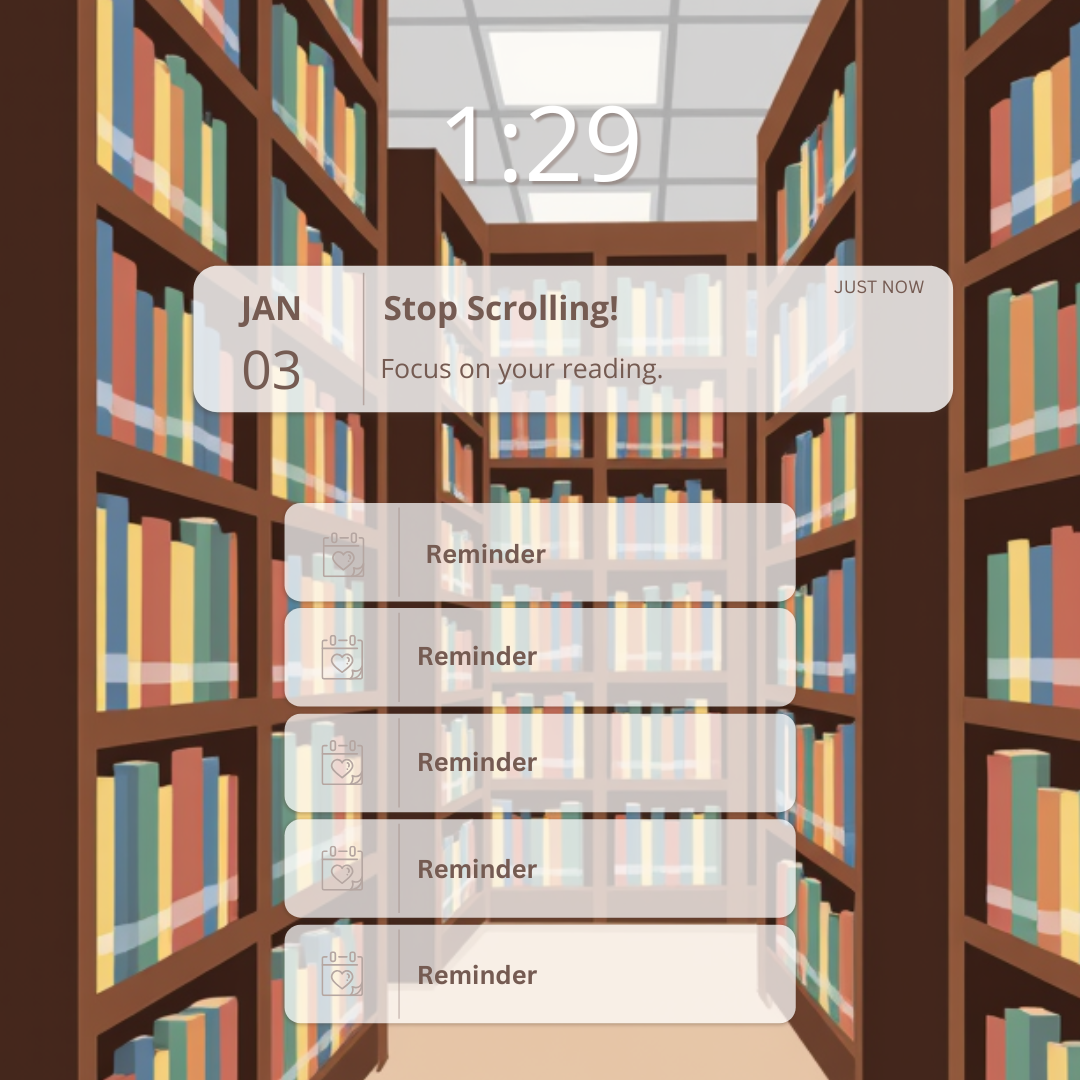
Students may be able to access entire libraries with just a touch, but convenience doesn’t equal quality. Physical books provide benefits that can’t just be replicated, especially in regard to focus, comprehension, and engagement. One of the biggest challenges of reading online is the distraction. By using the same device we use for texting, calling, scrolling, and watching shows, reading digitally becomes a multitasking experience.
According to neuroscientist Dr. Jared Cooney Horvath, performance while reading digitally underperforms when compared to when someone reads a physical book due to spatial organization. In a physical book, many people can remember the spacing of a paragraph or whether it was on the right or left, top or bottom. It’s hard to do this with digital copies of books, especially if they’re in a PDF format. Without a fixed physical location, it makes it harder to immediately recall information the way we can with physical books. Modern e-books have made it so that some books have a page flip effect, but it still remains a 2-D page that lacks the depth that a normal page would have.
This particular phenomenon of digital reading leading to less comprehension of the text is called the “screen inferiority effect.”
There are three main reasons why screen reading remains inferior:
First, digital reading leads to cognitive overload, which is when multitasking between different forms of digital stimulation takes away space to comprehend the text.
Second, it also compromises mental mapping. Without being able to see the book physically, it takes away from our ability to recognize spatial clues.
Finally, one of the most common effects of reading online–skimming. Reading on a screen gives us the tendency to just skim text rather than read through it analytically.
It’s also well known that screens impact attention spans. In fact, an experiment done on young students showed that students who watched and listened to a story online instead of reading it exhibited similar brain wave patterns to children with ADHD and scored significantly worse on tests evaluating their attention spans.
Studies also show that digital reading breeds overconfidence, because people tend to read it faster, thinking they understand the content better. With everything so accessible, it’s easier to just choose not to digest what we read, which takes away from the whole point of reading in the first place.
Beyond academics, physical books create a more meaningful experience when reading. The feeling of holding the book, annotating in the margins, and getting lost in the pages builds a stronger connection to the story itself.
However, this doesn’t mean that digital reading has no place in the world. In fact, studies and scientists agree that reading platforms such as a Kindle are very convenient. Kindles don’t require scrolling and also reduce eyestrain, but still fall below physical reading in comprehension due to one thing: turning the page.
Research suggests that we process information more effectively when we use multiple senses, such as reading the book, holding it, flipping through the pages, and even being able to smell the pages.
When it comes to connecting with what we read, physical books remain the better choice. In a world full of constant notifications and endless scrolling, they offer us something rare: a chance to slow down, focus, and fully experience another world, free of the trials we face when going online.


DONITH • May 16, 2026 at 10:39 pm
cool article, but isint the convenience the best part of modern reading? either way I liked it