

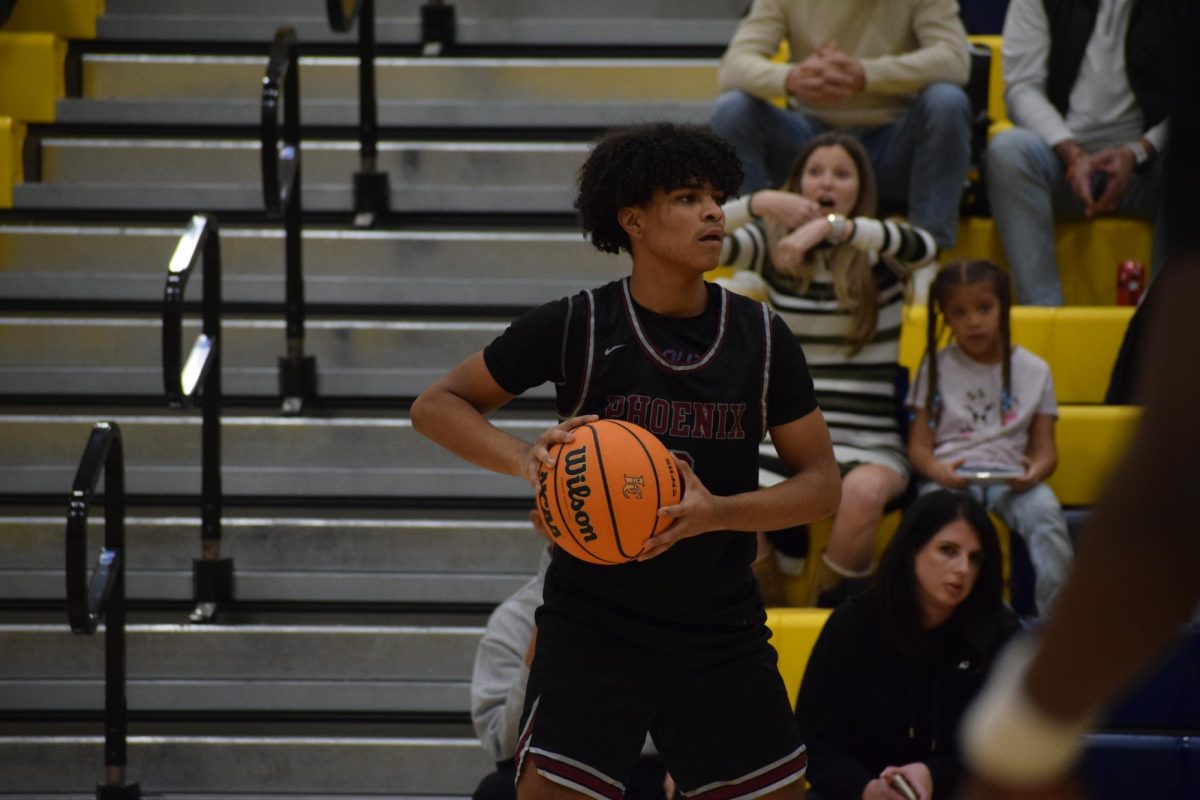
![Phoenix gets in position to initiate the beginning of an intense game. “It's coming to the end of the season here, so [our goal] is to just focus on working harder,” senior lineman Ryan Abbondanza said.](https://theblazerrhs.com/wp-content/uploads/2025/10/DSC_0042-1200x800.jpg)















On Nov. 4, Democratic candidate Abigail Spanberger won the governor’s race, becoming the first woman elected governor of the Commonwealth of Virginia, defeating Republican candidate and former Lieutenant Governor Winsome Earle-Sears by a decisive margin of 57.5% of the vote, compared Earle-Sears’s 42.3%. Spanberger’s 15-point victory marks the largest margin for a Democratic gubernatorial candidate in Virginia since 1961.
A former CIA officer and three-term congresswoman from Virginia’s seventh district, Spanberger positioned herself as a moderate focused on abortion protections, economic stability, and bipartisan governance. Spanberger’s victory, along with the Democratic sweep of the lieutenant governor and attorney general offices, sparked energized discussion in government classes across the school, as teachers encouraged civic engagement among students.
Along with the governor’s race, Virginia elected Lieutenant Governor Ghazala Hashmi, Attorney General Jay Jones, and Delegate Jas Singh (District 26), solidifying a complete Democratic trifecta in Richmond. Many observers view this sweep as connected to national political tensions.
“I think for people in general, the way the election ran was basically a referendum on Trump and how he’s doing, and I think there’s a lot of negativity surrounding his performance so far,” government teacher Katherina FeltsWonders said.
Many concerns of the students in FeltsWonder’s classroom were not directly related to key policies either candidates campaigned on, but tied into the larger trends of young people’s lack of confidence in the economy and affordability as they go into adulthood. “One of the biggest concerns right now is the cost of college and the idea that tuition’s gonna go up,” FeltsWonders said. “So I know that that’s an issue, and the folks running for office really didn’t address that very much.”
Beyond economics, FeltsWonders observed that many students in her classroom were also following debates around rights tied to the First Amendment in educational settings. “One of the issues in Virginia and across the country has been an issue of freedom of speech on campus, and students were tuned into that,” FeltsWonders said. “Freedom of speech is one of the guarantees in the First Amendment that we have that everyone knows that we have.”
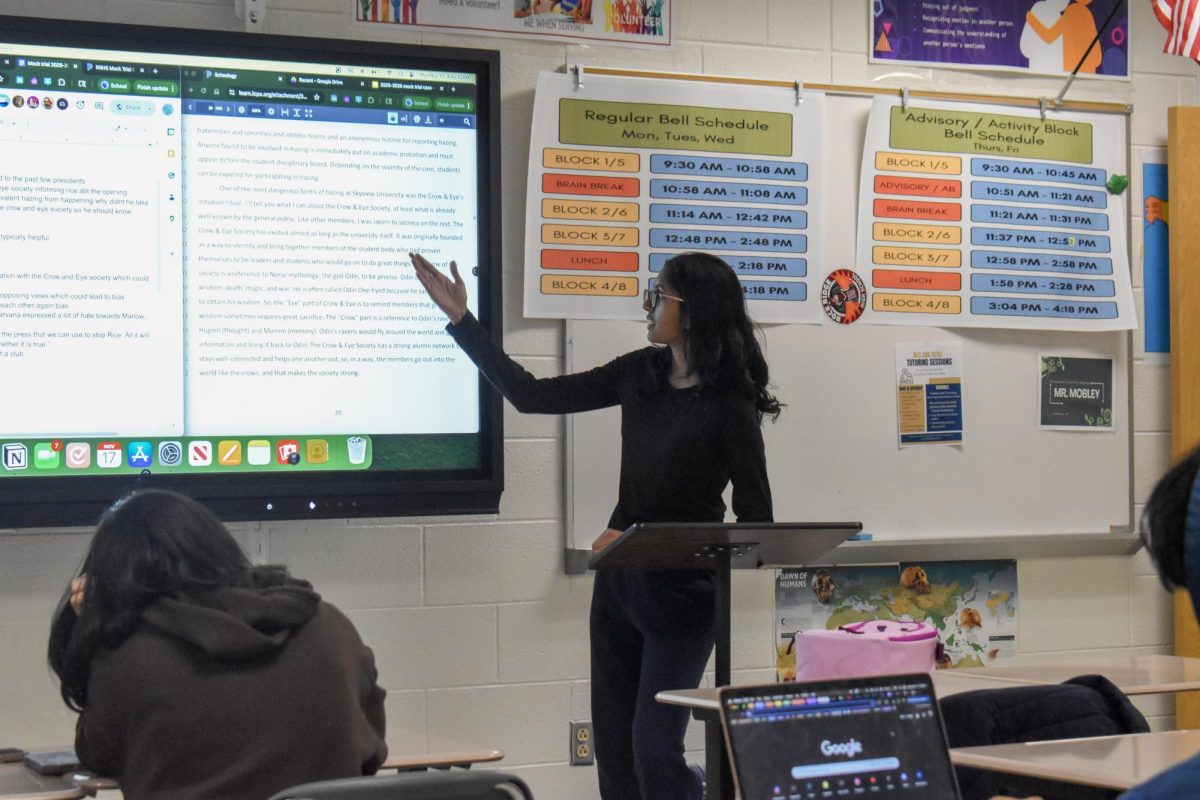
Virginia’s policy allowing 16-year-olds to pre-register to vote has brought civic participation directly into classrooms at Rock Ridge. Government classes host discussions, provide voter registration links, and reflection assignments, helping students recognize their role in shaping policies and elections.
“I think [students] are paying attention, and they know that their life is impacted by whatever is going on federally and locally,” FeltsWonders said.
For many seniors, this election was the first meaningful chance to impact the community. Senior Neal Khalko, a new voter in this election, considered the economy one of his top priorities when voting. “What I was looking for in a candidate was I wanted to help make Virginia more affordable,” Khalko said. “I think what I look for the most is everybody being able to afford [to live comfortably] and be employed.”
Senior Bhagath Pillai was also largely concerned with financial policies that affected him and his peers directly, particularly school funding. “By nature, as a student, I feel most affected and wish for school systems to receive proper attention,” Pillai said.
However, the economy is not students’ only concern. As Virginia is currently the only state in the South to not have rolled back its reproductive rights since the Dobbs decision, and the prospect of Virginia following suit was a large concern among young women and girls, both of voting age and younger.
As per current VA law, abortion is legal up to 26 weeks and 6 days of pregnancy without needing special justification; however, minors do need parental consent. Freshman Sadikshya Basyal, who is not yet a voter, cares about how this election might influence the laws in place. “I [think] it might affect the abortion laws that are in Virginia right now,” Basyal said. “Since we have a Democratic governor, they might change the abortion laws currently in place.”
One of Spanberger’s election campaign promises was to not only protect rights to contraception and abortion in the state, but also to put the Commonwealth on a path to codify reproductive rights in Virginia.
For teachers such as US History teacher James Wallen, they have other concerns. “I think I’m really curious about the things that directly affect students and their families,” Wallen said. “I’ll be curious, looking into what level they’ll be able to accomplish their platforms. I know especially for a Democrat, if they are able to accomplish [things like] not building data centers here, will that be something that becomes a blueprint that the party picks up on if they’re successful?”
While statewide results raise questions for teachers and students alike, local outcomes are also shaping the future of Loudoun County. The LCPS school board election was also held on Nov. 4, electing school board members for Algonkian, Broad Run, Dulles, Leesburg, and Sterling districts.
The non-partisan school board member elected for the Sterling district, Amy Riccardi, sees how more local issues concern the parents and students in the community, like the upcoming 2027 budget changes. “The first thing I need to understand is why we’re asking for so much more money when we have so much less student population this year,” Riccardi said. “I want to align the budget to the needs of our students.”
Regarding student rights, Riccardi described balancing support for transgender students with privacy and safety concerns. “I have incredible passion and compassion for our transgender kids, and I want to make sure that all students in all of our schools feel safe and are not bullied,” Riccardi said. “But at the same time, we’ve also got to make sure that we’re protecting the private spaces for our boys and girls and that bathrooms, locker rooms, and sports are kept separate based on biological sex.”
Looking ahead, students and teachers believe rising political polarization has pushed young people to pay closer attention to state and local issues.
“Nationally, I think the Trump administration [had a] very divisive [effect] on the country,” FeltsWonders said. “I do think students are scared about that [and that] they’re concerned about things like ‘What world am I getting into?’”.
“Really, for the last four or five years, since the pandemic, I think it’s definitely a realization. Students have, in some ways, grown up a little faster, because they have to see that, you know, what’s happening in the world is impacting them. [I think students now], they’re much more concerned than previous groups of students I’ve taught,” FeltsWonders said. “You have to get involved, even if it’s just being informed, and it is important to be informed, to know who you’re voting for and what they’re going to do for you, and that they’re not going to be against something you feel strongly about.”

pranikaa • Nov 30, 2025 at 7:46 pm
you cooked