





![Phoenix gets in position to initiate the beginning of an intense game. “It's coming to the end of the season here, so [our goal] is to just focus on working harder,” senior lineman Ryan Abbondanza said.](https://theblazerrhs.com/wp-content/uploads/2025/10/DSC_0042-1200x800.jpg)






























Your effort in school was never what defined you. It was your grade.
Many hardworking students have an eerily similar schedule across the country: studying for hours the night before a test, making Quizlets, and rewatching lectures. Some color-code their notes while others create brain dumps. Still, everyone has weak points. Whether it’s derivatives or timed writes, there’s always that one test you just can’t pass.
Last year, those couple of tests wouldn’t have been the end of the world. You could retake them, fix what you misunderstood, and bring your grade back up where it should be.
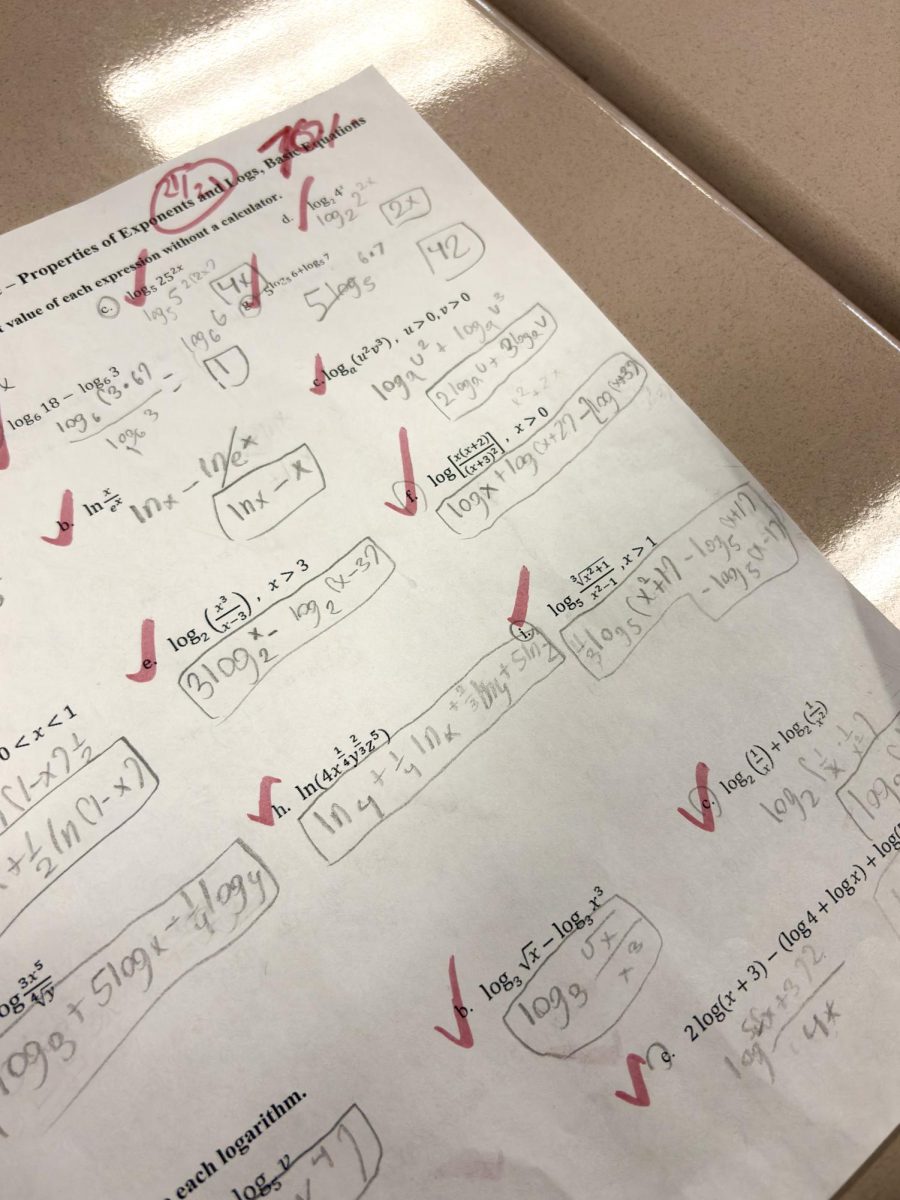
But now, under the new LCPS grading policy, your highest possible retake score is 70%, no matter how well you learn the material a second time. Whether you were a straight-A student or not, one bad test now leaves a stain on your transcript, and students across the county are feeling the effects.
What Changed, and Why It Matters
In April 2025, LCPS revised Policy 5030. The biggest shift in the policy was the change of the retake ceiling grade, from 80% to 70%.
And if that wasn’t enough, formatives are now graded, AP classes lost their 50-percent floor, and the district argues all of this will build responsibility for students.
But the real implication is simple: the system fails to recognize your progress, even if you master the content you messed up on.
Who Does This Hurt Most?
This new policy is harmful to all students, but especially high-achieving ones who push themselves hardest to get the best grades. Before, they were able to relearn material and prove they understand topics with the reward of a grade that reflects as such. Now, fixing your mistakes means nothing, and the efforts of students stop mattering.
Students with inconsistent test performance are heavily affected as well. Not everyone performs well under a one-shot, high-pressure environment. The retake system used to give them a chance to demonstrate mastery, but now it barely gives them a lifeline. This is notably seen in Rock Ridge High School. In a survey conducted by The Blaze, 86.3% of students reported facing increased stress due to the new grading system. The new grading system isn’t helping students; it’s hurting them. It is taking away from the peace of mind that the original retake system gave to students – a chance to try again.
This is especially detrimental for upperclassmen preparing for college, for whom a single bad day can risk conditional acceptance or scholarships they rely on. The pressure to maintain near-perfect grades creates an environment where every assignment feels overwhelming. This heightened stress connects directly to grade inflation, which waters down students’ efforts. Grade inflation worsens this detrimental competition among students and worsens one poor performance.
Grade Inflation and Why This Disadvantages LCPS Students
According to the ACT, grade inflation is a problem “common across classrooms, districts, and states.” This idea is further corroborated by a news report published by the ACT in 2022, where high school GPAs were found to have grown significantly; however, ACT composite scores remained largely stagnant through the same time period. In other words, students are earning higher grades; however, that isn’t coming with increased academic performance. Kids aren’t getting smarter—the grades are simply becoming easier to obtain.
But, this raises the question: Is grade inflation a national problem or a local one?
The LCSB argues that it’s a problem rooted in our own system. In a press release from the LCSB, one of the main reasons for the new policy was student reliance on the retake policy to obtain a better grade. “Retakes should be capped at 70%,” an LCPS Employee said. “The students have literally no incentive to study for the first test because they can still get a B in the course. This grade inflation is hugely problematic.”
One of the main arguments pushing the change in the grading policy is one that is to a national scale; however, are the efforts, or a lack thereof, of a few students enough to account for the entire student body? They aren’t. The new grading policy does not distinguish the difference between students utilizing retakes to improve rather than those who use them to simply earn a passing grade, and that in itself is the most harmful aspect of the policy. If anything, a majority of the students using the policy are utilizing it to improve, and we can find this by looking at indicators of educational achievement.
One way to examine this is by looking at the Standards of Learning (SOL) pass rates. The SOL is a standardized test that measures a student’s academic performance based on guidelines set by the Virginia Department of Education (VDOE).
According to a 2024 press release by Loudoun County Public Schools, SOL scores have generally been increasing year after year. This shows that grades aren’t rising because of inflation, but rather due to an increase in overall education standards.
In terms of Rock Ridge High School’s academic achievement, GreatSchools.org finds that Rock Ridge’s SOL test scores are far above those of the state, except for geometry and geography. Grade inflation is a serious problem, but combating it with policies that decrease LCPS students’ grades only puts them in a bad place in terms of national ranks. The rise in grades within the county is not due to grade inflation but rather an overall growth in educational standards, and once again, the new retake policies undermine that growth while also failing to recognize improvement.
The previous LCPS grading policy didn’t take ratings over success, stats over effort, or passing over learning. It encouraged growth, allowed for development, and gave students the peace of mind that one test was not the end of it all.
The current grading policy places cramming over improvement and failure over progress.
LCPS should revise its grading policy. Not to inflate grading, but to support its students. Until then, one bad test will continue overshadowing weeks of real learning. And no policy should punish students for trying.