



![Phoenix gets in position to initiate the beginning of an intense game. “It's coming to the end of the season here, so [our goal] is to just focus on working harder,” senior lineman Ryan Abbondanza said.](https://theblazerrhs.com/wp-content/uploads/2025/10/DSC_0042-1200x800.jpg)










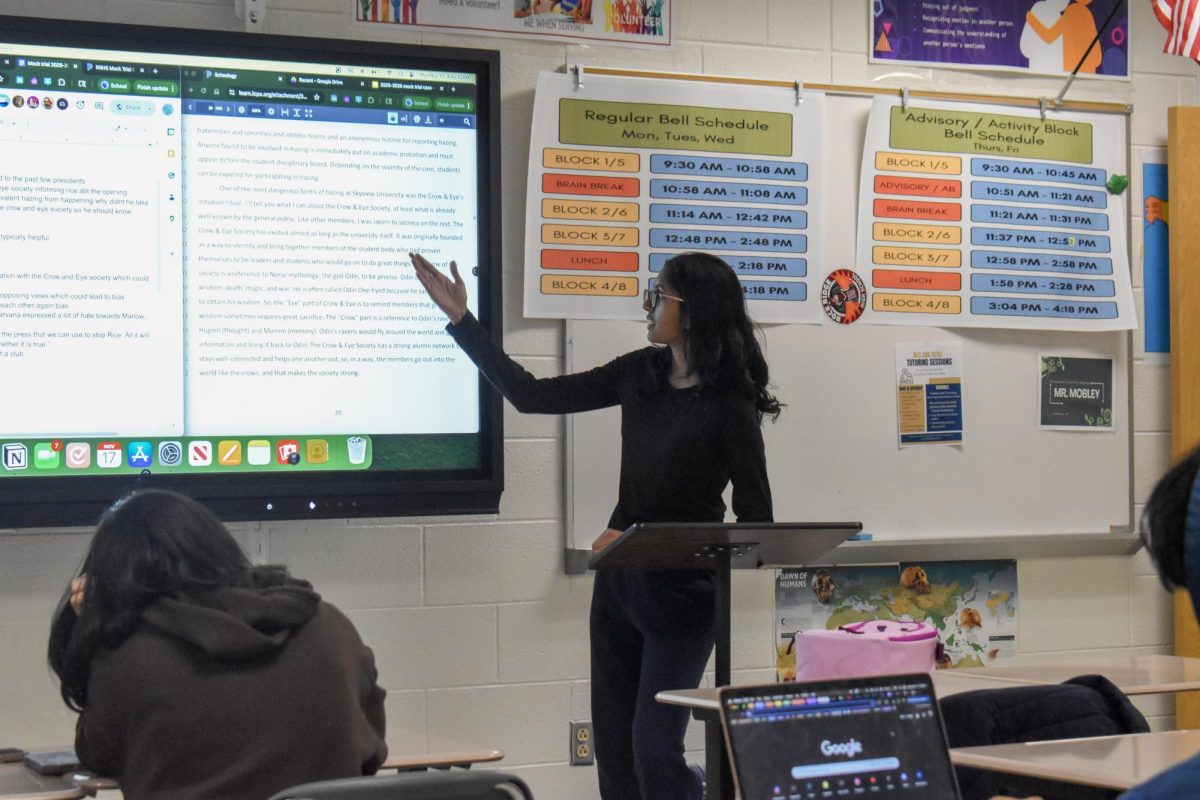














English 9 teacher Daryn Lewis sighs as she picks up a heavy stack of test papers. She explains the contents of the vocabulary test while simultaneously scanning her students’ laptop screens, looking for any trace of AI. These habits have ingrained themselves in teachers’ brains as AI misuse has grown among students. “Last year… I went over the instructions and the requirements for their quarterly papers and … they would write in [a] template from the time I assigned it to the time it was due. But now [I] provide more structure and less computer usage, so the only time they’re actually allowed to use their computer is when they’re typing up their initial rough draft,” Lewis said. “Eerything else comes straight from their own knowledge.”
The Context
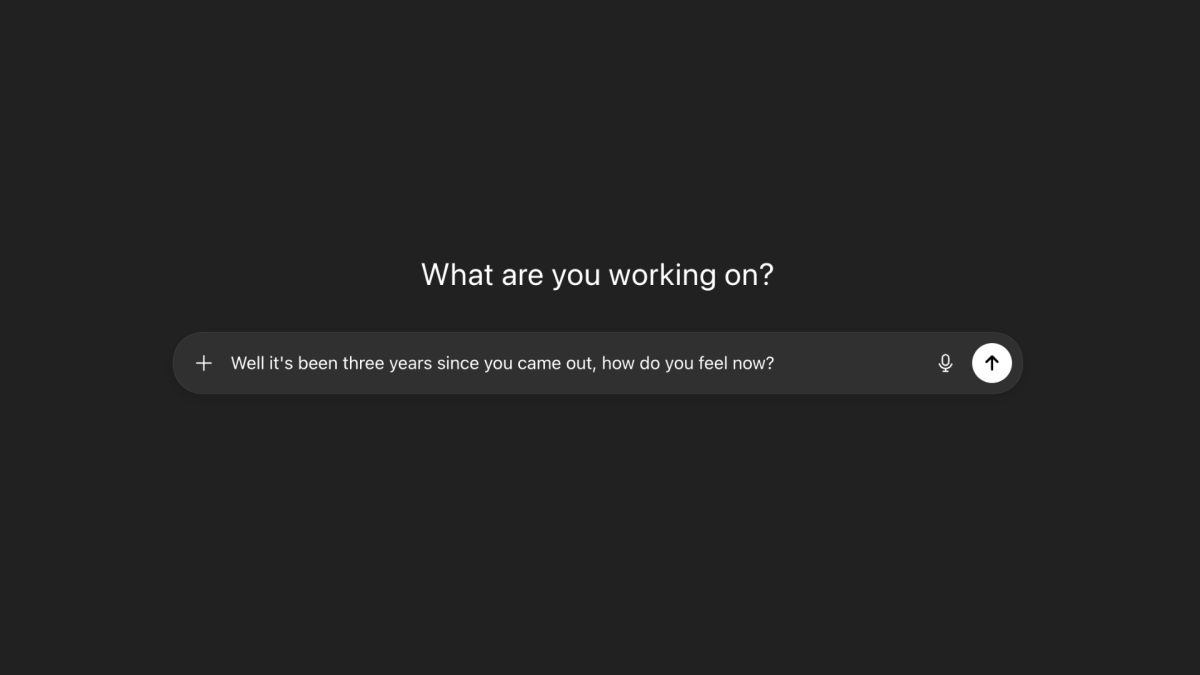
On Nov. 30, 2022, ChatGPT launched , instilling an instant change to students’ and teachers’ everyday lives alike. Ever since, it has grown eerily close to all parts of the student experience, from Spotify DJ, to AI generated music and books, and to its infamous presence in our learning.
Initially, the OpenAI company was used within the field of AI research with tools such as OpenAI Gym to aid in programming. However, ChatGPT, or GPT-3, was the company’s big break. In Nov. 2022, OpenAI released ChatGPT, a tool that would be hailed as the second “Pearl Harbor” due to its ability to disrupt “nearly every industry.”
Within less than a week, ChatGPT was able to attract 1 million users, and by January 2023, it had around 100 million monthly users. Now in Dec. 2025, ChatGPT has reached 800 million users per week, around 10% of the world’s adult population.
The Effect of AI in the Classroom
DE Physics teacher Rama Srinivasan has found that even though cheating was expected with AI, the scale of it was far more than she expected. “In our DE Physics, we trained [students] not to use technology, [and] at least advocate for some amount of critical thinking and where they can actually train their thoughts to read questions,” Srinivasan said. “[Cheating through AI] circumvents all of that, and from that perspective, it is very disappointing. But it’s also an awakening for [teachers] because we know now how it’s been misused, even though it was expected, it was not expected to the extent of [which it was] misused.”
Within the past years, the presence of ChatGPT within assignments has increased, and in response, teachers have turned to implementing writing checking tools such as Turnitin, where teachers can check the validity of students’ essays and other digital work. In fact, Turnitin stated in a 2024 press release that almost 11% of assignments were seen to have at least 20% of AI writing present, and 3% of assignments being composed, with almost 80% of AI writing present out of the 200 million papers submitted.
However, it isn’t truly accurate, creating false positives, such as students getting flagged for AI even though they didn’t use it. The results are students accused of using AI even though they didn’t and are met with disciplinary consequences.
“Turnitin was introduced [to] limit AI usage, and of course, there were boundaries that [teachers] set,” senior Nila Divakar said. “A lot of kids didn’t think that they were good boundaries because [for students] who didn’t use AI and still got AI readings, [the same] rules (honor code) were still enforced on them. I could write very generically, and I would get 32% AI, but that’s because I wrote generically, not because I used AI.”
To combat this false flag rate, teachers have also been using other methods to prevent the use of AI in assignments, some of those methods coming from the past. “As technology gets more advanced, methods to prevent cheating need to become more advanced too,” Lewis said. “And I mean, the only way is to go old school. [What] I like to call it is pen and paper. There’s ways to cheat even [with] pen and paper, but you have to put more effort into do that.”
Ironically, paper testing has become a type of modernization for teachers adapting to AI throughout Rock Ridge High School; however, the use of paper testing is at the cost of students– if a student has bad handwriting, an impaired hand, or a moment of fatigue, the expectation is that they complete the writing at an acceptable level. “I remember my sophomore year, I was asked to write a CPA for Spanish, but I had an injured wrist, [and] I still [had] to write it, so it was a bit of a trouble because I couldn’t just type it,” senior Nila Divakar said. “Of course, there’s clarity issues because first of all, the legibility of your handwriting might not be as clear as it is [when] typing.”
The Good in the Bad, and the Bad in the Good
Although AI has been seen to be a problem for teachers in their classroom, it’s not all bad. Some teachers have been using AI to make their lessons hands-on and interactive; within Jacqueline Laab’s AP World History class, students used AI to create speeches and images for their assigned empire project. Laab’s saw the use of AI as a tool to allow students to further develop their understanding. “We used [AI] to generate some images for our Autopsy of the Empire project, like Shah Jahan with architectural plans for the Taj Mahal,” Laabs said. “[Students also] made a speech about the (Mughal) empire [with AI] and why it will be missed and what about it will be missed the most. You can’t create something genuinely funny like that or engaging like that without understanding enough about the empire themselves. If [our students are] using it right, in an approved way, if teachers are okay or sort of allowing that concept into the project, then I think [AI] could be used properly and as a benefit.”
Though AI can be used in an effective manner in the classroom, the issue arises when students use it to compromise their learning. Instead of students using AI to increase their mastery and help them in whichever assignment is needed, they use it in a way that instead degrades their understanding, making them complacent.
“With [a] teacher lens on, [AI] hinders the education of my students because they rely heavily on AI, and due to AI, [there is] less of a process for [students] to figure out how to solve problems because even with [a] quick Google search, now they have the AI overview,” Lewis said.
This problem was not only seen in Lewis’s class but also in Meghan Adair’s AP World History Class.
“I will say immediately, I noticed a change in the nature of student confidence when it came to AI and consulting it,” Adair said. “I saw a decrease in confidence in their own ability, and it was immediately, ‘Let me check my own analysis response information [with] ChatGPT.’ [They now are] really conditioned to ‘Oh, it should be this fast, it should be this easy,’ and so anything that is larger than a paragraph or has maybe some more complex language and vocabulary, it’s very hard to sit with it and struggle with things that are challenging.”
The Future
School districts have been changing policies to allow for AI in the classroom. Currently, LCPS is looking at new policies for implementing AI within the classroom. With these changing policies, it is important to recognize that AI is not going anywhere, and classrooms are changing to incorporate AI.
“We can’t bury our heads in the sand and act like this isn’t here to stay, and it’s going to be ever evolving,” Adair said. “We need to learn how to use it ethically.”