




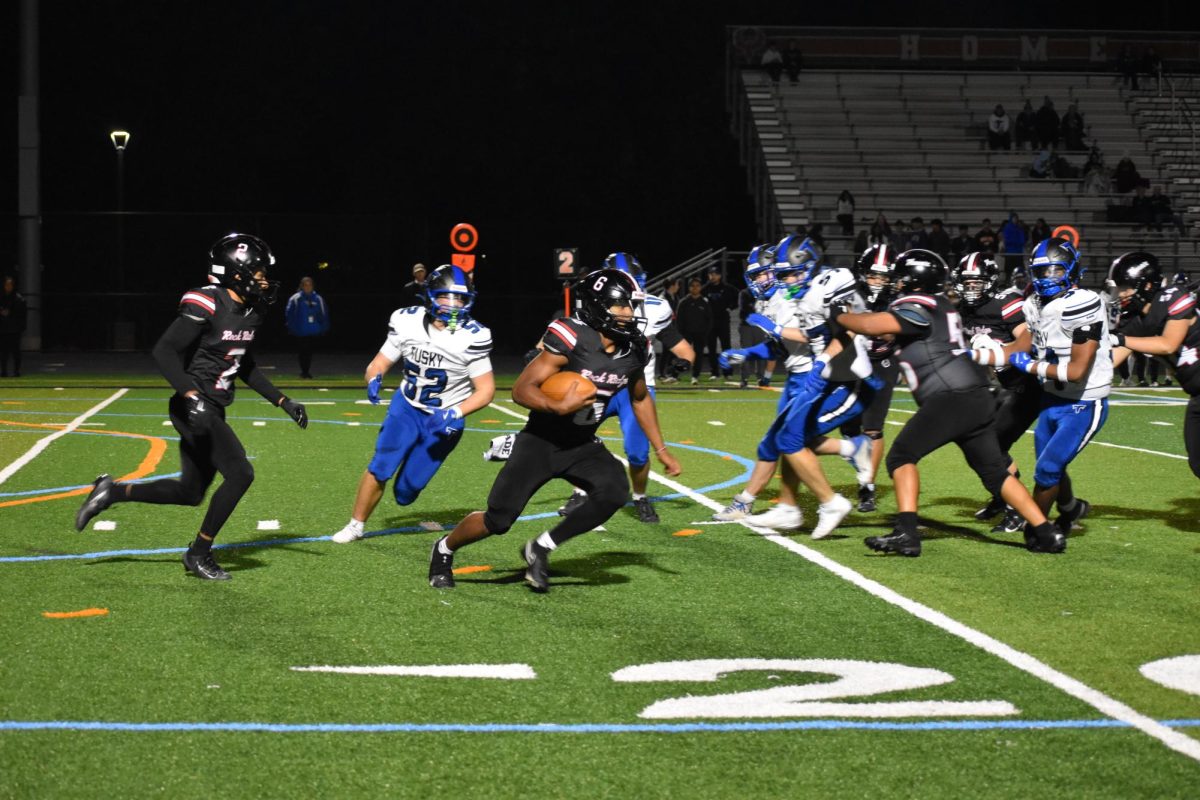
![Phoenix gets in position to initiate the beginning of an intense game. “It's coming to the end of the season here, so [our goal] is to just focus on working harder,” senior lineman Ryan Abbondanza said.](https://theblazerrhs.com/wp-content/uploads/2025/10/DSC_0042-1200x800.jpg)




























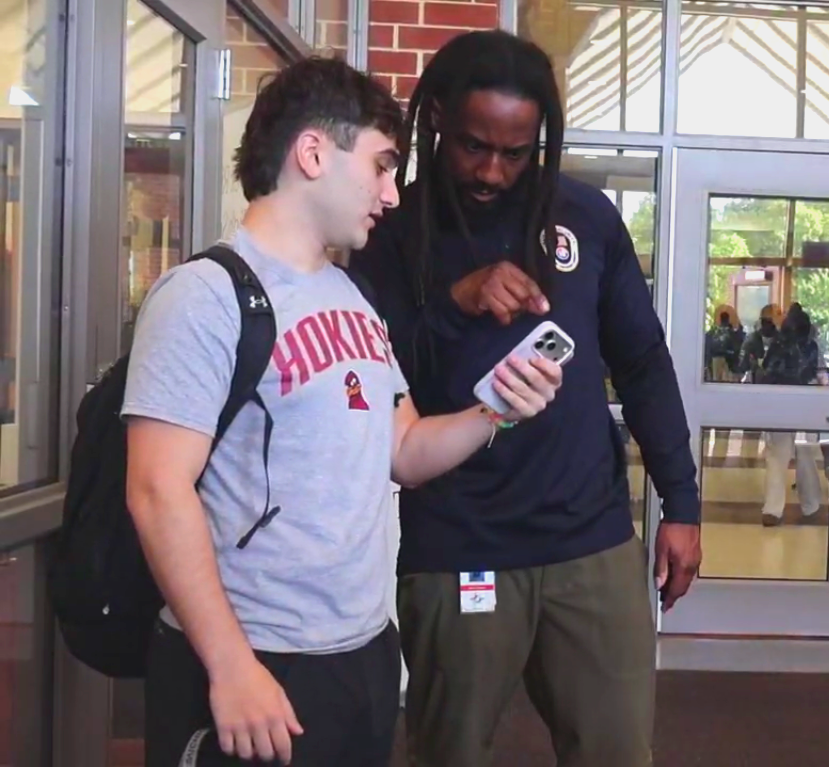


In an age filled with social media and smartphones, many teenagers consume their news not from newspapers or news networks, but rather from their phones – specifically from social media platforms such as TikTok and Instagram.
The appeal of using social media comes from its quick and short videos that are accessible with a simple swipe. Yet, the downside is that not all videos are accurate and credible.
Many students at Rock Ridge admit that convenience plays a major role in how they stay informed. “I get my information from social media,” freshman Sreeja Inumella said.”[I prefer] watching short videos because my attention span isn’t that great. A rough estimate [of how much of my news I get from social media would be] 90% because I’m online a lot, and I don’t really read [news articles].”
Inumella’s response highlights a growing issue: According to research from Deloitte in May 2022 on
“How Gen Z consumes news”, 51% of the younger portion of Gen Z get their news from social media or messaging services, while 30% get their news from news websites. On social media, teens are exposed to large amounts of information, but do not verify what they see.
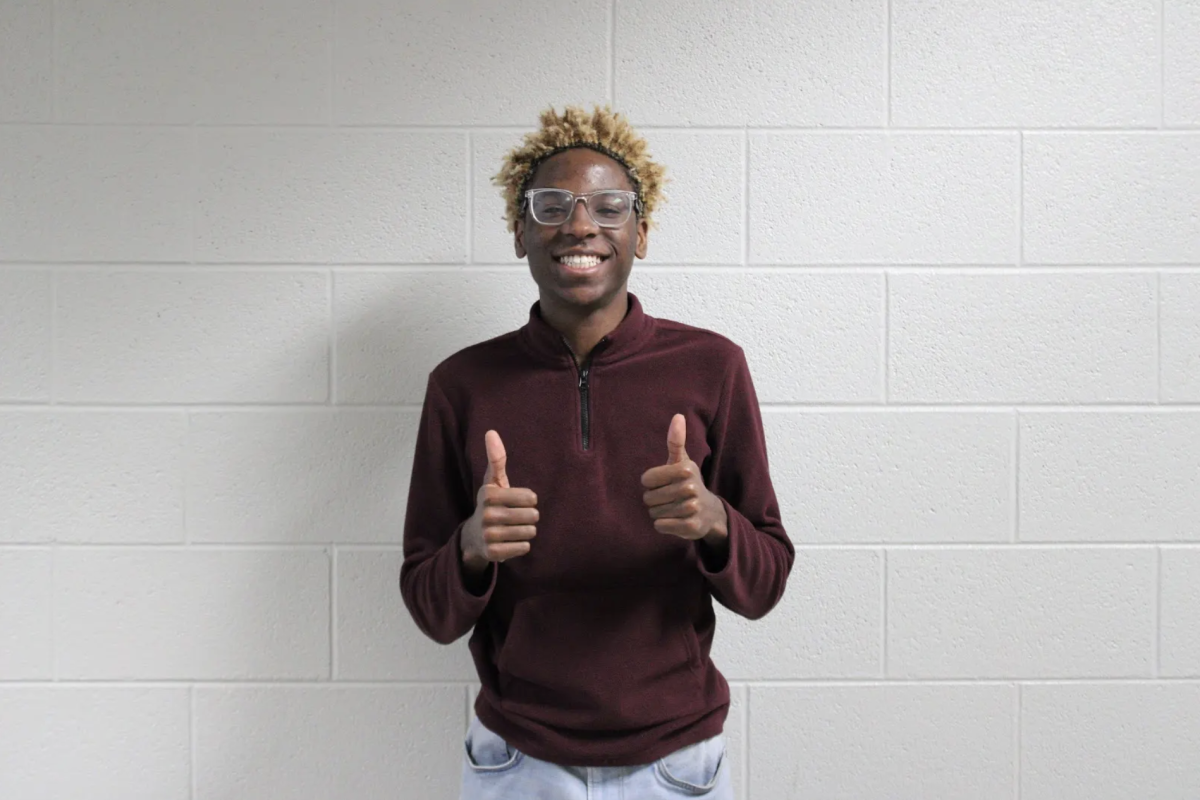
However, sophomore JT Lawanga takes a different approach. Instead of relying on social media, he prefers to use news outlets. “[I use] Fox [news],” Lawanga said. “I’ve learned not to [rely on social media]. English class taught me to not trust bias.”
Junior Naimisha Alluri has a similar approach to Lawanga, but overall does not use social media at all when consuming news. “I look at multiple news sources because I know there’s a lot of bias if you go through [only] one specific source,” Alluri said.
However, Alluri could be the outlier. According to Pew Research, about 20% of Americans under 30 are not consistent consumers of news on major platforms. Yet, according to professor of Journalism and Media at the University of Texas at Austin Paula Poindexter, it makes sense for younger students, like Inumella, to be more reliant on social media compared to upperclassmen. “The [more] incentive you provide [highschool students] with as they get older, [the more] they want to pay attention to [the] news,” Poindexter said. “And that’s normal. The books that you would read as a senior in high school are going to be very different from those that you would read as a freshman. So why should it be any different from news?”
Using social media as a news source can be an unreliable platform because it is open for anyone, anywhere to post what they want. “I think [social media affects how we consume news] because there are so many people on social media that could be easily influenced,” Lawanga said.
A study from the News Literacy Project in May 2024 on teens’ information habits found that around 8 in 10 teens believed one or multiple conspiracy theories shown on their social media, ranging from public health issues to the apocalypse. Across social platforms, teens are easily susceptible to this inaccurate news.
According to Poindexter, it is important that teenagers read news that is accurate and unbiased – and not to fall into the social media trap. “The goal should be for [teenagers] to be informed by credible news,” Poindexter said. “It’s really for the public good and the betterment of society to help people be informed by credible news.”
Yet, when teens aren’t exposed to news, it can lead them to be uninformed on what’s happening around them and miss out on key events and developments. “We have another generation that’s coming up that’s not going to be informed,” Poindexter said. “That’s a problem when you live in a democracy. You want to be up to date about things [because] it can affect your life. So you have a choice. You can inform yourself, or your choice can be not to inform yourself.”
Due to their preference for shorter videos on social media, Gen Z’s shorter attention span might also affect their ability to read long articles, which most would believe would result in a decline in more traditional journalism being replaced with multimedia. However, this claim is far from the truth. “There will be more variety as opposed to one replacing the other,” Poindexter said. “There will always be people who want to read the whole story. There will be people who will want the short form.”
Regardless of what type of news teenagers consume, Poindexter believes they should pay attention to the credibility of the source and accuracy of information.“[Teens] need to [know if the person] reporting [is] a credible source,” Poindexter said.” The other thing that [teens] [should] do is to look closely at how they are reporting the news.”Journalism [isn’t] somebody just giving an opinion; it’s verified information.”